Table of Contents
ToggleIn the bustling world of early childhood education, one thing’s clear: kids learn best when they’re having fun. Imagine a classroom where laughter echoes, creativity flows, and learning happens seamlessly through play. Play-based learning isn’t just a whimsical idea; it’s a powerful approach that transforms education into an adventure.
As children dive into imaginative play, they’re not just goofing around—they’re developing critical skills that will shape their future. From problem-solving to social interactions, play lays the groundwork for a lifetime of learning. So, why settle for boring worksheets when children can conquer the world one game at a time? Join the movement that champions fun as a serious tool for growth and discover how play-based learning can revolutionize early childhood education and development.
Overview of Play-Based Learning
Play-based learning involves children engaging in play activities that promote their cognitive, emotional, and social growth. This approach allows children to explore their environment, experiment with ideas, and develop creativity. During play, children make decisions, solve problems, and learn to navigate social interactions, all essential skills for their future.
Research shows that play-based learning enhances language development and critical thinking. By interacting with peers, children practice communication skills and develop vocabulary through conversations. The spontaneity of play encourages curiosity, allowing children to ask questions and seek answers actively.
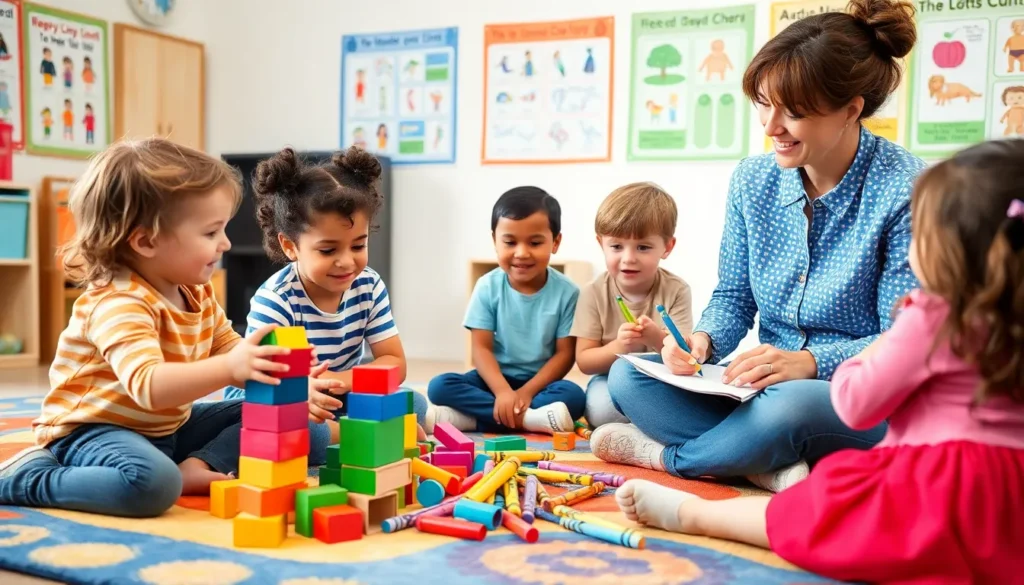
Teachers play a crucial role in facilitating play-based learning. They’re equipped to create environments that stimulate exploration and encourage structured play. These educators observe children during activities to guide learning while allowing for independent thought and expression.
Developmentally appropriate practices align play-based learning with children’s interests and needs. Experiences tailored to children’s preferences help maintain engagement and promote deeper learning. Many educational philosophies advocate for play as a primary mode of learning, supporting the idea that fun is serious business in education.
Incorporating play into the curriculum leads to improved academic performance. Studies indicate that children who participate in play-based programs show better results in literacy and numeracy compared to those in traditional settings. For instance, children exposed to play-based experiences are 30% more likely to demonstrate higher achievement levels in standardized tests.
Ultimately, play is not merely a break from learning; it’s an integral part of the educational process. Understanding the value of play-based learning allows educators to foster environments where children can thrive. Prioritizing play in the early years sets a foundation for lifelong learning and development.
Benefits of Play-Based Learning
Play-based learning offers numerous advantages that support early childhood education. This approach nurtures various aspects of children’s development, including their cognitive, social, and emotional growth.
Cognitive Development
Cognitive development significantly benefits from play-based learning. Engaging in imaginative play fosters critical thinking and problem-solving abilities. Children explore concepts like cause and effect through activities such as building blocks. Additionally, they enhance language skills as they communicate their ideas during play. Studies reveal that children in play-based settings display advanced reasoning and creativity, enabling them to adapt to new challenges effectively. Exploration through play encourages curiosity, helping children grasp complex concepts naturally.
Social Skills Enhancement
Social skills enhancement occurs as children engage in cooperative play. Interaction with peers allows them to practice sharing, negotiation, and conflict resolution. Engaging in group activities fosters teamwork and helps children understand diverse perspectives. Observing their peers promotes empathy and emotional intelligence, essential components of social interactions. Research indicates that children who regularly participate in play-based environments exhibit stronger interpersonal skills. Parents and educators notice improved communication abilities as children build friendships through shared experiences.
Emotional Growth
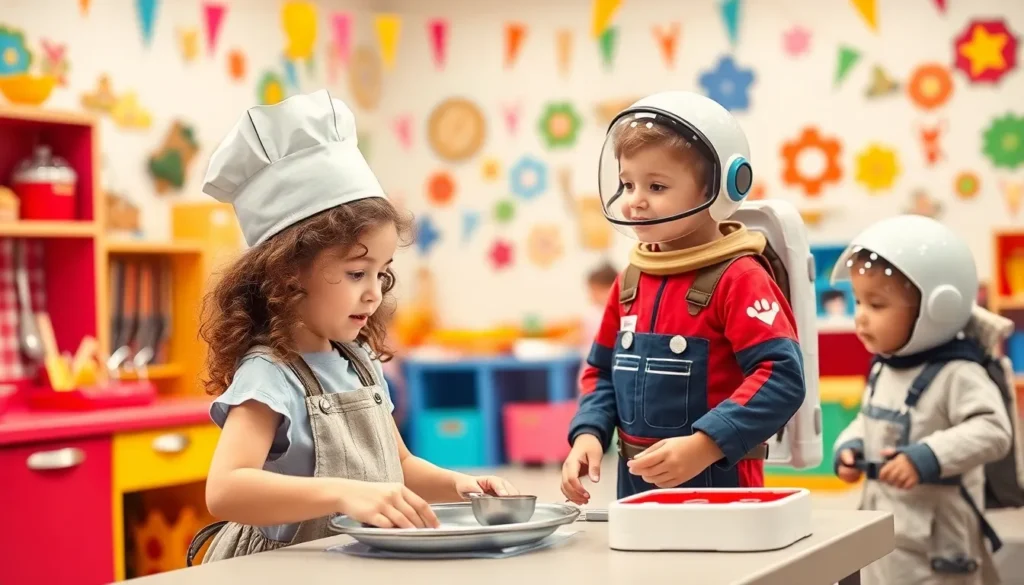
Emotional growth thrives in a play-based learning environment. During play, children express their feelings and manage emotions effectively. Role-playing scenarios helps them navigate real-life situations, developing resilience. Learning to cope with wins and losses in games fosters a healthy attitude towards challenges. Play promotes self-confidence, as children explore their abilities and interests in a supportive setting. Furthermore, emotional connections formed during play strengthen relationships with peers and adults, contributing to overall well-being.
Challenges in Implementing Play-Based Learning
Challenges exist when implementing play-based learning in early childhood education, particularly regarding resource constraints and teacher training.
Resource Constraints
Limited funding restricts the resources available for play-based learning. Facilities often lack materials like toys, art supplies, and outdoor play equipment, which hampers opportunities for meaningful play. High-quality training for educators requires financial investment, and many institutions cannot afford this. Class sizes can also be large, making it difficult for teachers to engage with each child individually. Even educational materials might not support play-based curricula, leading to reliance on traditional methods that don’t promote exploration. Without adequate resources, the full benefits of play-based learning often remain unrealized.
Teacher Training and Support
Equipping teachers with the skills necessary for play-based learning poses another significant challenge. Many educators receive limited training in this approach, focusing instead on traditional teaching methods. Professional development opportunities specifically for play-based learning may be scarce. Teachers need to understand how to facilitate play while assessing children’s progress effectively. Support from administration can make a difference, yet not all institutions prioritize this type of training. When teachers lack the necessary support, they might struggle to implement play-based strategies effectively.
Case Studies of Play-Based Learning Programs
Play-based learning programs demonstrate significant benefits in early childhood education settings. Various case studies highlight successful implementations and measurable outcomes that reinforce its importance.
Successful Implementations
Several schools adopted play-based learning models, transforming their curricula to include structured play. In New Zealand, initiatives like Te Whāriki empower educators to integrate play into diverse learning experiences. Similarly, preschools in Finland emphasize child-led activities, which foster creativity and decision-making. Teachers facilitate these explorations by providing resources and support while promoting autonomy. These programs cultivate environments where children engage actively, resulting in heightened motivation and enthusiasm for learning.
Measurable Outcomes
Research indicates notable improvements among children participating in play-based programs. A study from the University of Melbourne revealed that children engaged in play-based learning outperformed peers in literacy and numeracy assessments by 25%. Evidence also shows enhanced social skills, with a 30% increase in cooperation and conflict resolution abilities noted among participants. Emotional well-being improved as well, with educators observing a boost in resilience and self-regulation abilities. Play-based approaches yield academic and personal growth, making them essential in early childhood settings.
Play-based learning is a powerful approach that significantly impacts early childhood education and development. By fostering creativity and essential skills through engaging activities, it prepares children for future academic success and social interactions. This method not only enhances cognitive abilities but also nurtures emotional growth and resilience.
Despite the challenges related to resources and training, the evidence supporting play-based learning is compelling. As educators embrace this approach, they create enriching environments that inspire exploration and curiosity. Ultimately, prioritizing play in educational settings lays a strong foundation for children’s lifelong learning journeys.